Role
Senior Product Designer (Lead UX)
Scope
End-to-end redesign • Web Design • Service ecosystem
Focus
Product Strategy • Conversion Optimisation • System Integration
Impact
+41% revenue • +21% conversion • -44% drop-off

Overview
Marhaba is a premium airport service provider offering meet & greet, lounge access, and baggage services across multiple international airports.
The product serves a diverse audience — from first-time travellers to frequent flyers — often booking under time pressure with limited understanding of service differences.
Unlike traditional e-commerce, Marhaba operates as a service ecosystem, where booking decisions directly impact real-time operations — including staff coordination, lounge availability, and physical service execution at the airport.
As the service portfolio expanded, the experience became increasingly complex, requiring users to navigate multiple service tiers, unclear differences, and fragmented booking logic — ultimately affecting both user confidence and business performance.
The Problem
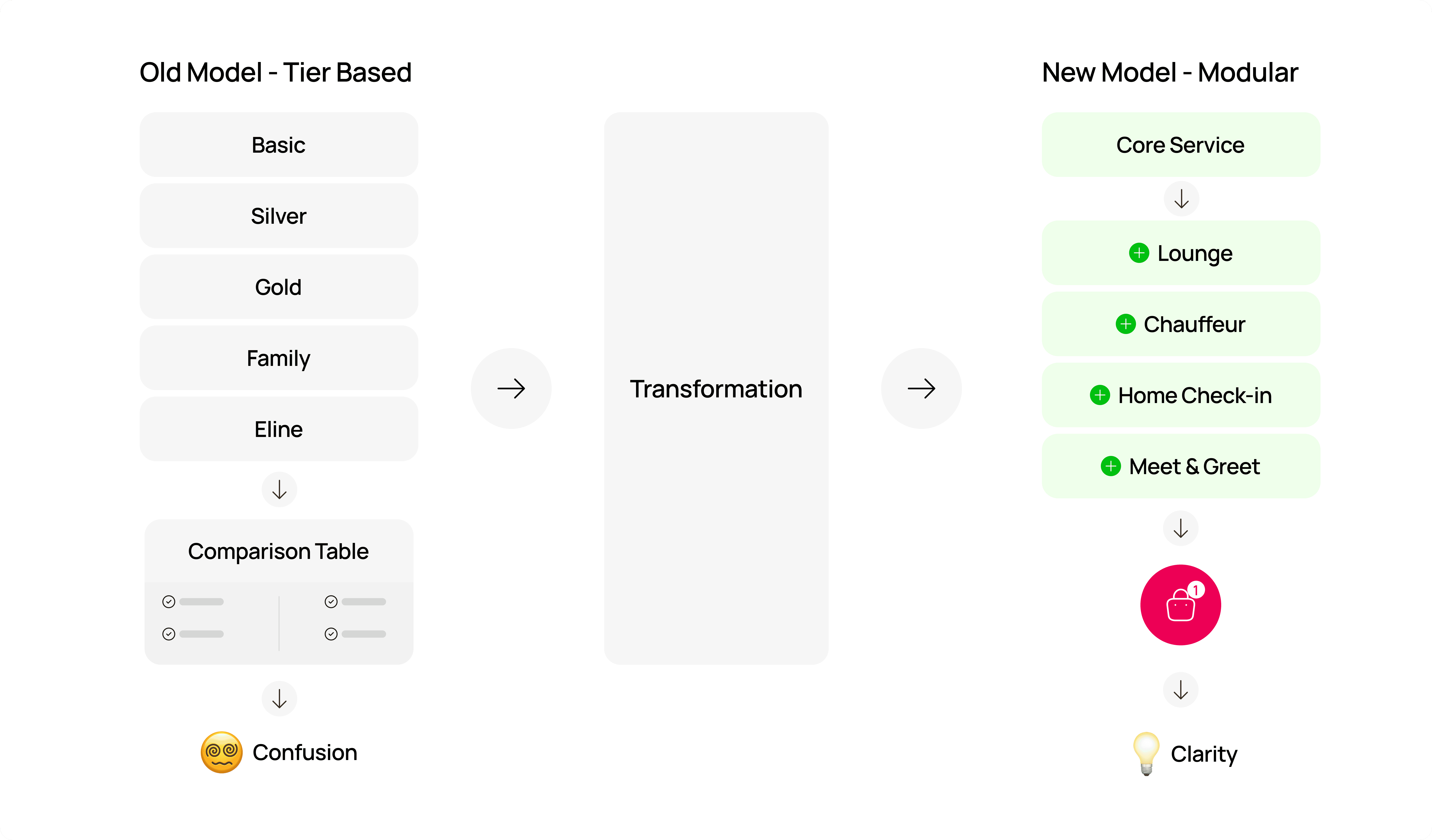
The booking experience relied on predefined service tiers (Basic, Gold, Family), requiring users to compare multiple options through large, complex tables.
User Experience Issues
High cognitive load when comparing multiple service tiers
Difficulty understanding differences between services
Lack of guidance in selecting the right option
Decision paralysis leading to abandoned sessions
Observed Behaviour
Session recordings and behavioural analysis (Quantum Metric) revealed that users frequently:
Spent excessive time on comparison tables
Revisited the same sections multiple times
Struggled to identify key differences between options
Dropped off without completing the booking
Business Impact
High drop-off during service selection
Low conversion rates
Increased support requests due to confusion
Limited effectiveness of upsell opportunities
Role & Ownership
I was the sole designer on this project — owning the end-to-end experience from research and strategy through to design system and delivery.
I redesigned the service model, not just the UI The brief was to improve the booking flow. I pushed the scope further — arguing the real problem wasn't the interface, it was the underlying service model. Predefined tiers (Basic, Gold, Family) forced users into comparison-heavy decisions they weren't equipped to make. I proposed replacing the tier model entirely with a modular, build-your-own structure. This required buy-in from product and business stakeholders, but the data from Quantum Metric supported the case. The +41% revenue increase came directly from this structural change.
I defined the DUBZ integration approach When Marhaba acquired DUBZ, the expectation was a full technical merge of two separate inventory and payment systems. I flagged early that this wasn't feasible within budget or timeline — and that forcing it would create more user friction, not less. I proposed a white-label integration instead: DUBZ services embedded within the Marhaba experience, visually aligned to maintain trust, but operating on their own backend. It was a strategic trade-off I advocated for, and it allowed us to expand the service offering without disrupting the existing journey.
System Complexity
The shift from predefined tiers to a modular service model fundamentally changed how users make decisions — and how the business captures value.
Instead of forcing users to choose between rigid packages, we enabled them to construct their own experience by starting with a core service and adding relevant options such as lounge access or chauffeur service.
This had three key effects:
Increased attach rate of add-ons by presenting them contextually within the booking flow
Improved conversion by reducing decision complexity and eliminating comparison-heavy friction
Higher average order value as users naturally expanded their service bundle based on their needs
Research & Discovery
Before defining solutions, I needed to understand the full system — users, operations, and the gaps between them
Stakeholder & Operational Constraints
I brought all key stakeholders into a structured workshop — operations, product, airport services, IT, and marketing — and ran a series of exercises to surface business targets, team pain points, and alignment gaps.
What I discovered:
Operations defined success as smooth on-ground execution — but had no visibility into what users had booked until the day of service
Marketing was promoting services that operations couldn't consistently deliver at scale
IT flagged that inventory constraints were invisible to the booking flow — creating false availability
Airport services team had workarounds for common booking errors that had never been fed back into the product
The workshop reframed the project from a UI redesign into a system alignment problem — which directly informed the decision to move to a modular, inventory-aware booking model.
Journey Breakdown Analysis
I mapped the end-to-end journey across 8 stages: Discovery → Selection → Customisation → Booking → Confirmation → Pre-travel → Travel Day → Post-travel.
Critical gaps identified:
Users didn't understand what they'd booked until they arrived at the airport — confirmation emails had no service summary
The transition between digital booking and physical service execution was invisible to the user
Post-travel had no feedback mechanism — leaving no data for service improvement
Key Service Ecosystem Insights
I used Quantum Metric session recordings of the existing Marhaba website to identify behavioural patterns without needing initial user interviews. This allowed me to move faster and ground decisions in real usage data rather than assumptions.
Key findings:
Users spent disproportionate time on service comparison pages — revisiting 3+ times before either booking or abandoning
Drop-off was highest at the service selection step, not at payment — confirming the problem was comprehension, not trust
Users on mobile showed significantly higher abandonment than desktop — the comparison tables were unusable at smaller screen sizes
Returning users re-entered the same flow from scratch, suggesting no mental model was being built across sessions
User Segmentation Strategy
Three archetypes emerged from the research: the Business Traveller (high frequency, low tolerance for complexity), the Family Traveller (moderate frequency, high need for clarity), and the Elderly (low frequency, extreme need for reassurance and trust).
Design decision: I prioritised two archetypes rather than one — the Business Traveller shaped the speed and efficiency of the booking flow, while the Elderly shaped the language, confirmation design, and service transparency. The Family Traveller was served by both directions.
Marhaba x Dubz Integration
As part of Marhaba’s expansion, we needed to integrate services from a newly acquired company (Dubz) into the booking experience.
However, both platforms operated on separate inventory and payment systems — making a full technical merge costly and time-intensive.
To address this, we designed a white-label integration approach:
Dubz services were embedded within the Marhaba experience
Users could discover and select these services without leaving the ecosystem
The transition to Dubz checkout was visually aligned to maintain trust and continuity
This approach was a strategic trade-off — allowing us to expand the service offering quickly while minimizing user friction, without requiring immediate backend consolidation.
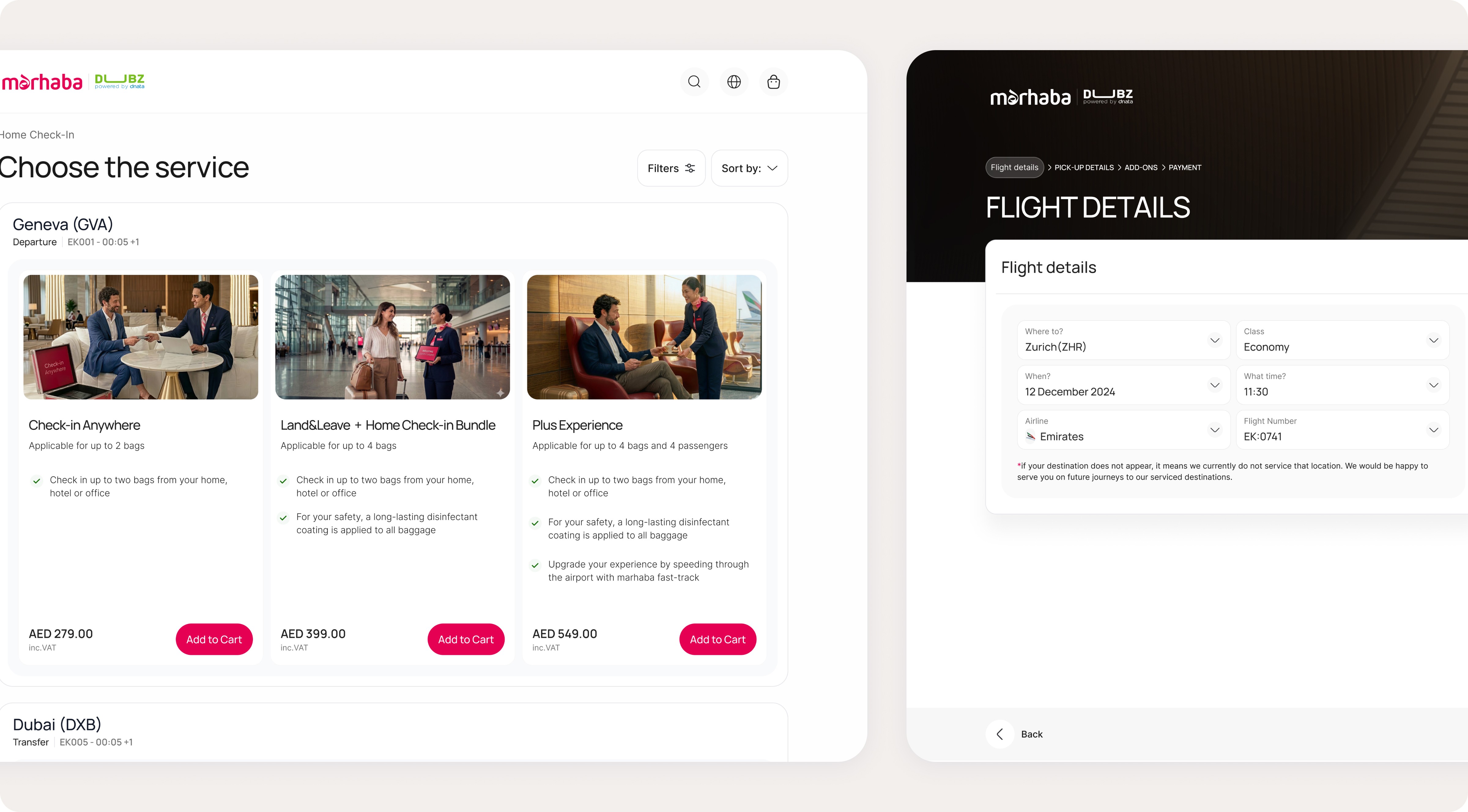
System-Driven Booking Experience
A system-driven booking experience that replaces rigid service selection with a flexible, modular model — guiding users from discovery to checkout while aligning real-time availability, service combinations, and user intent.

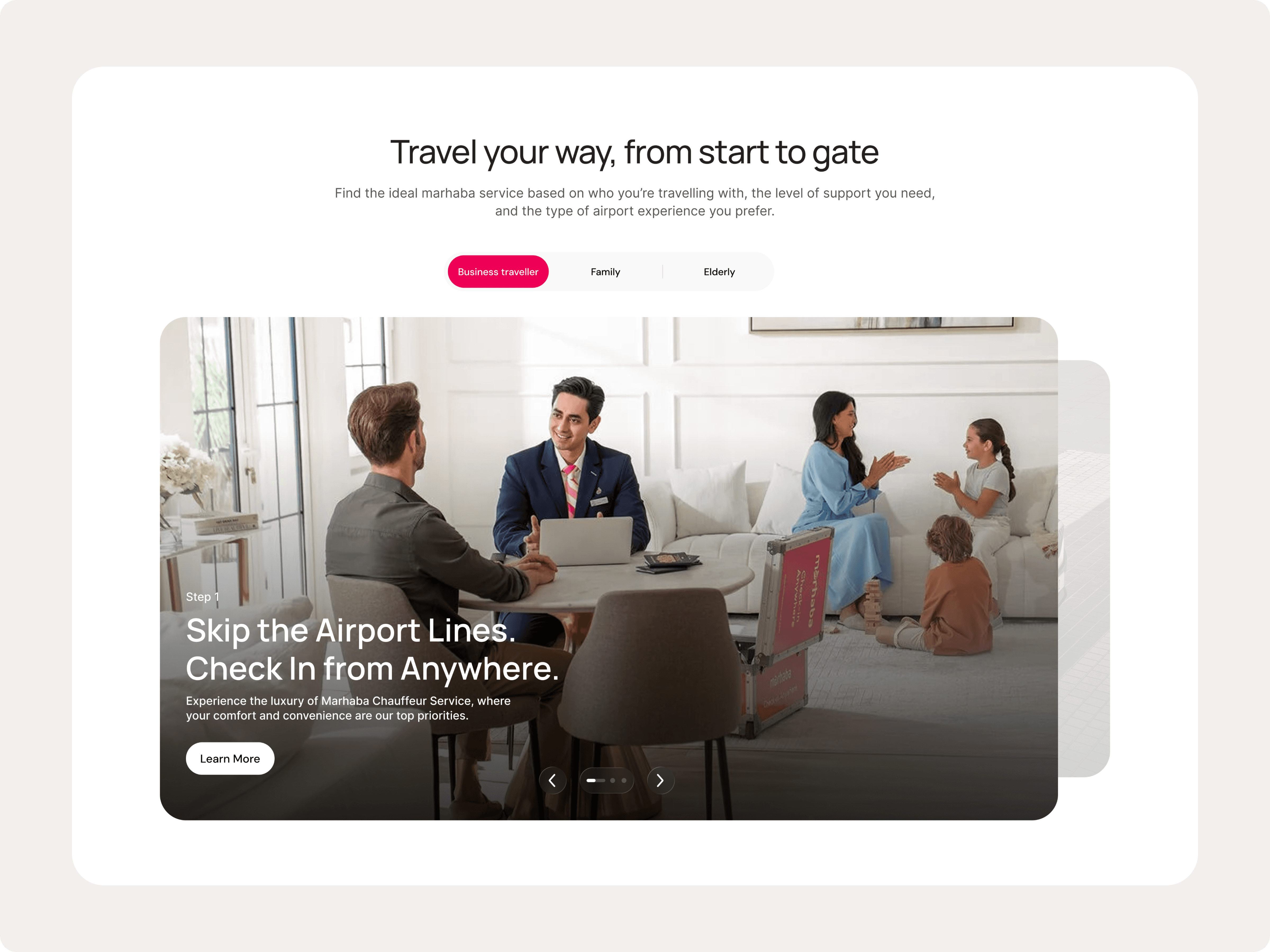
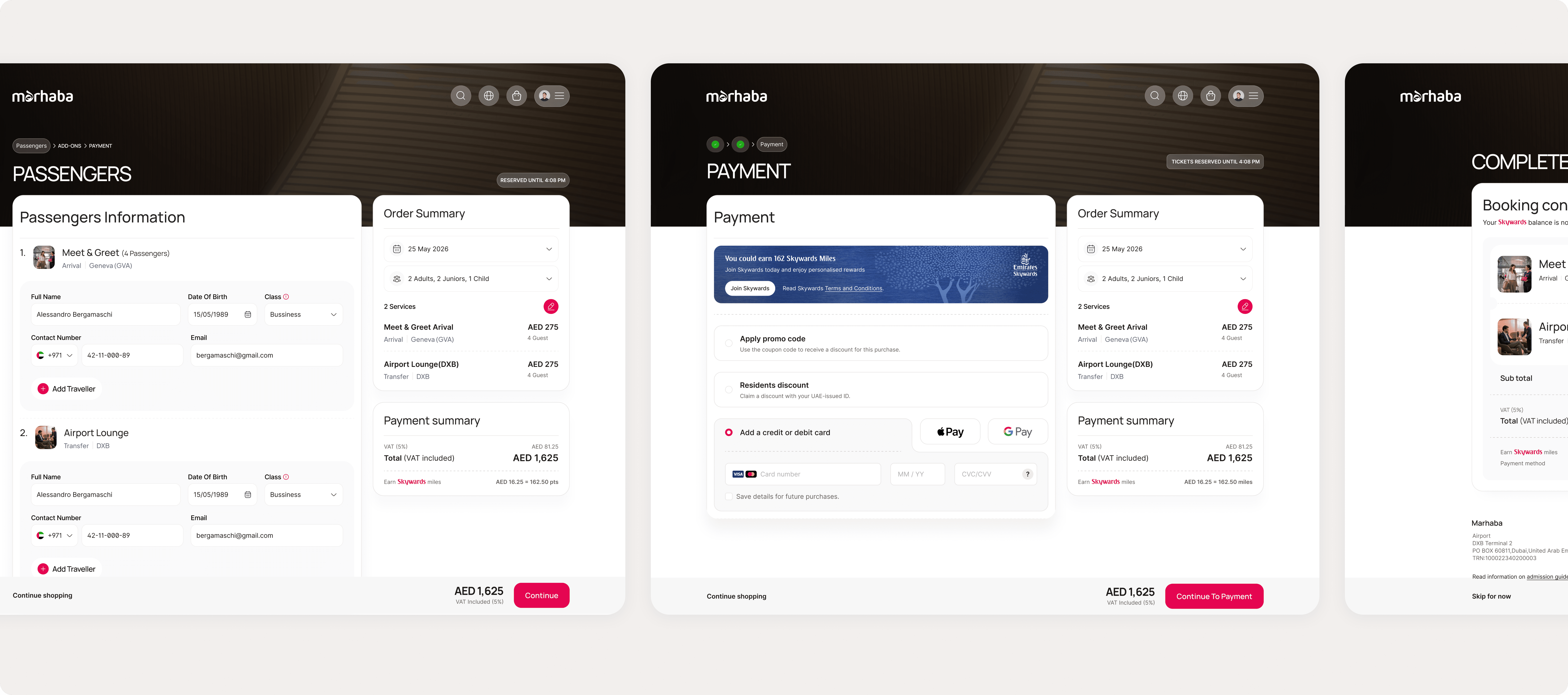
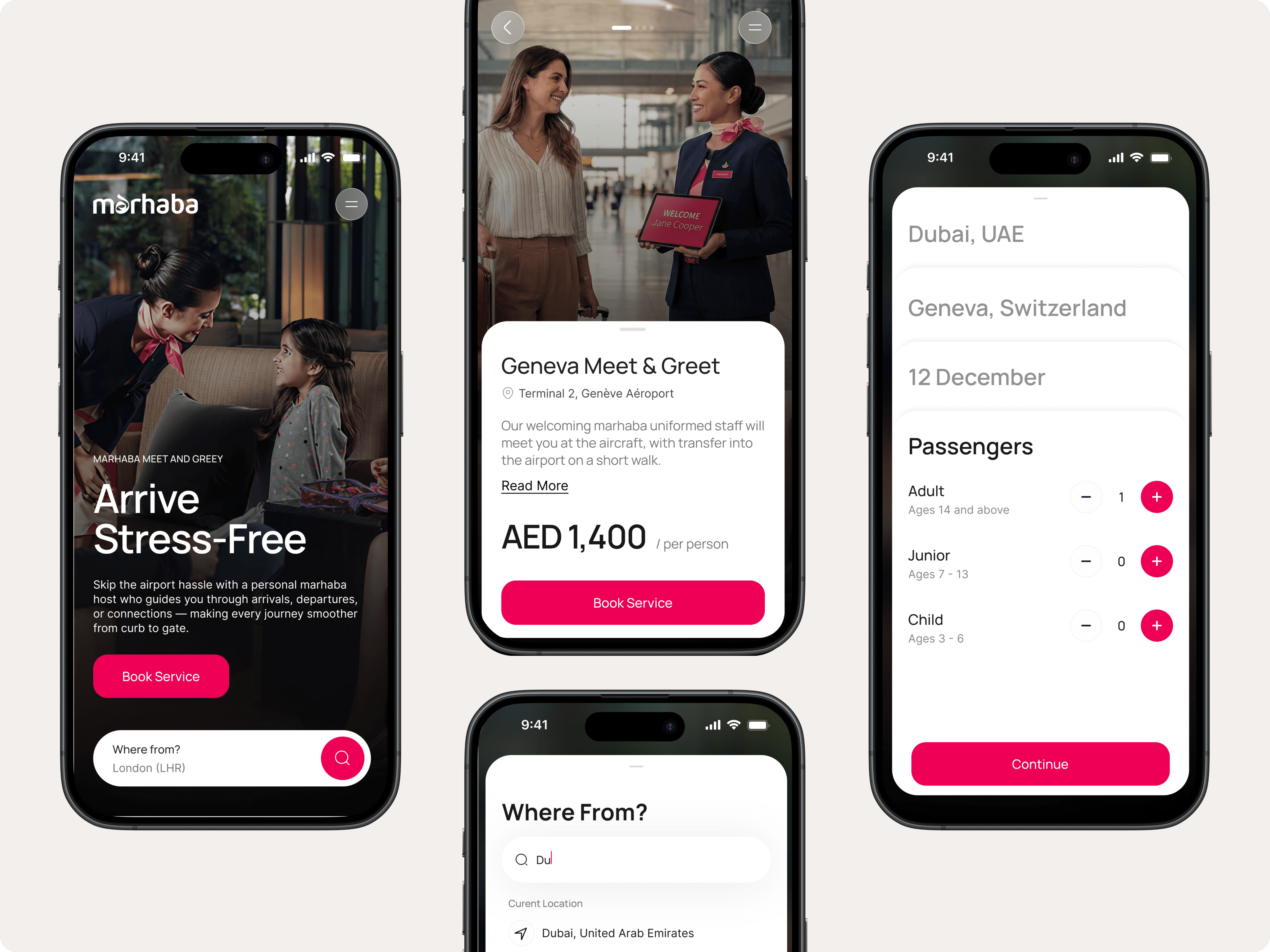
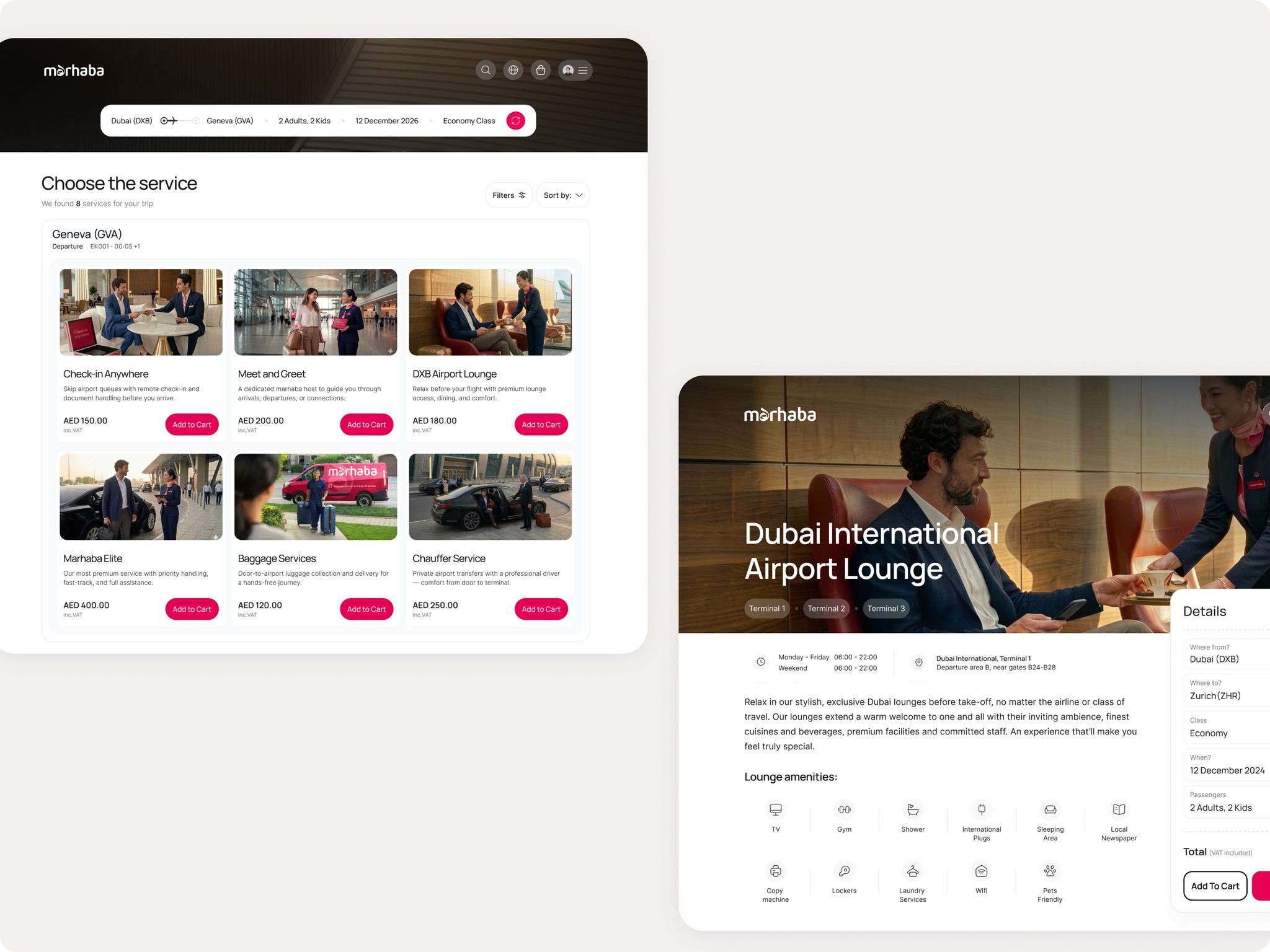
The system design principles were translated into a unified design language, ensuring that complex operational logic could be expressed through clear, consistent interfaces across all touchpoints.
Design System
The booking experience required a design system built around operational logic — not just visual consistency. Every component needed to reflect real-time constraints: service availability, capacity limits, and inventory states that changed dynamically across airport locations.
Key Technical Highlights:
Scaled across multiple brands: Token-based architecture allowed the system to adapt rapidly across Marhaba's expanding partner network — maintaining visual consistency without rebuilding components from scratch.
Connected UI with real-time operations: High-order components were designed to surface backend constraints directly in the interface — so users never reached a selection that wasn't actually available.
Improved delivery efficiency: A shared system language between design and engineering reduced the design-to-production cycle by 30% — cutting back-and-forth on implementation decisions and reducing QA cycles.
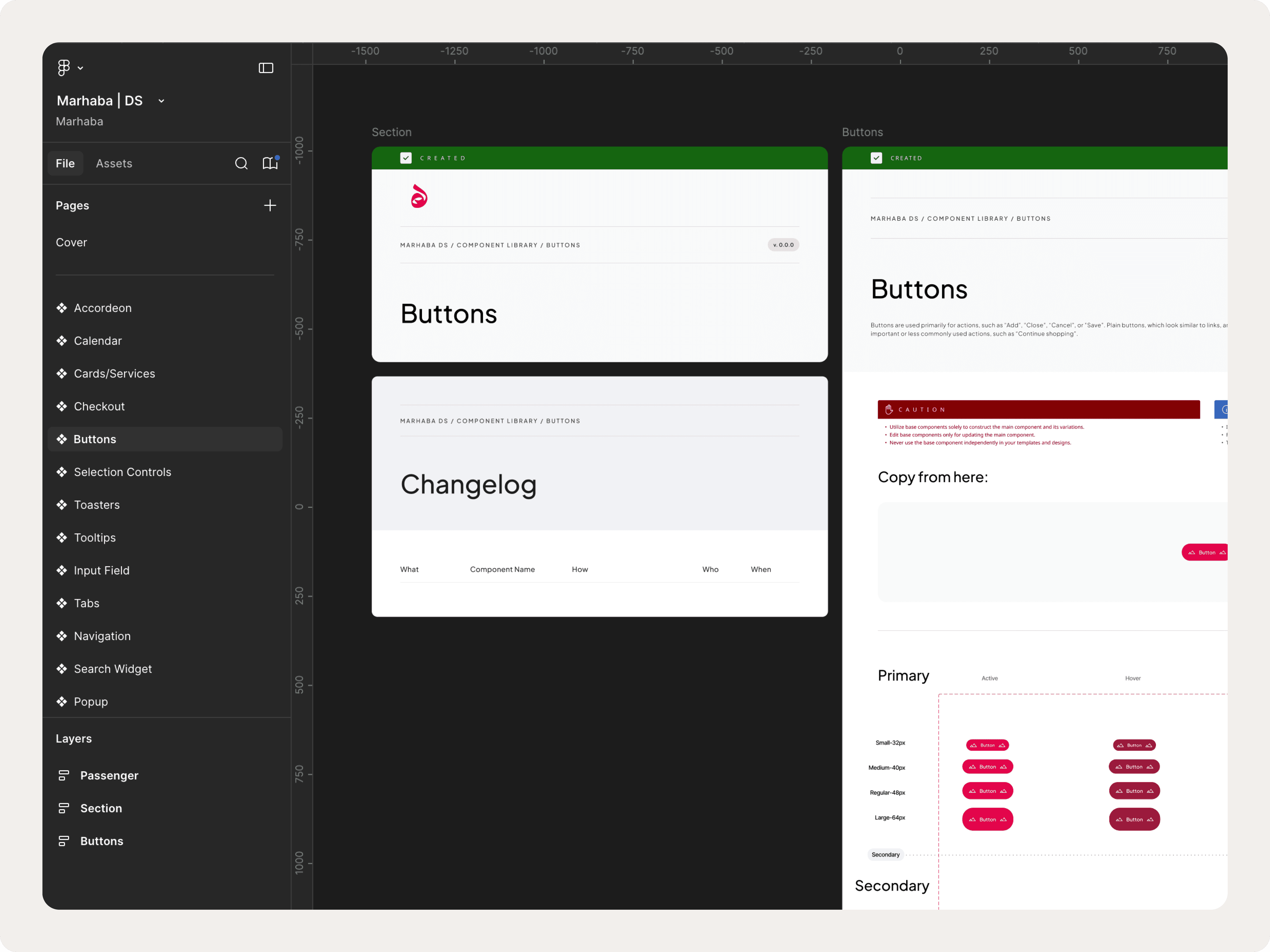
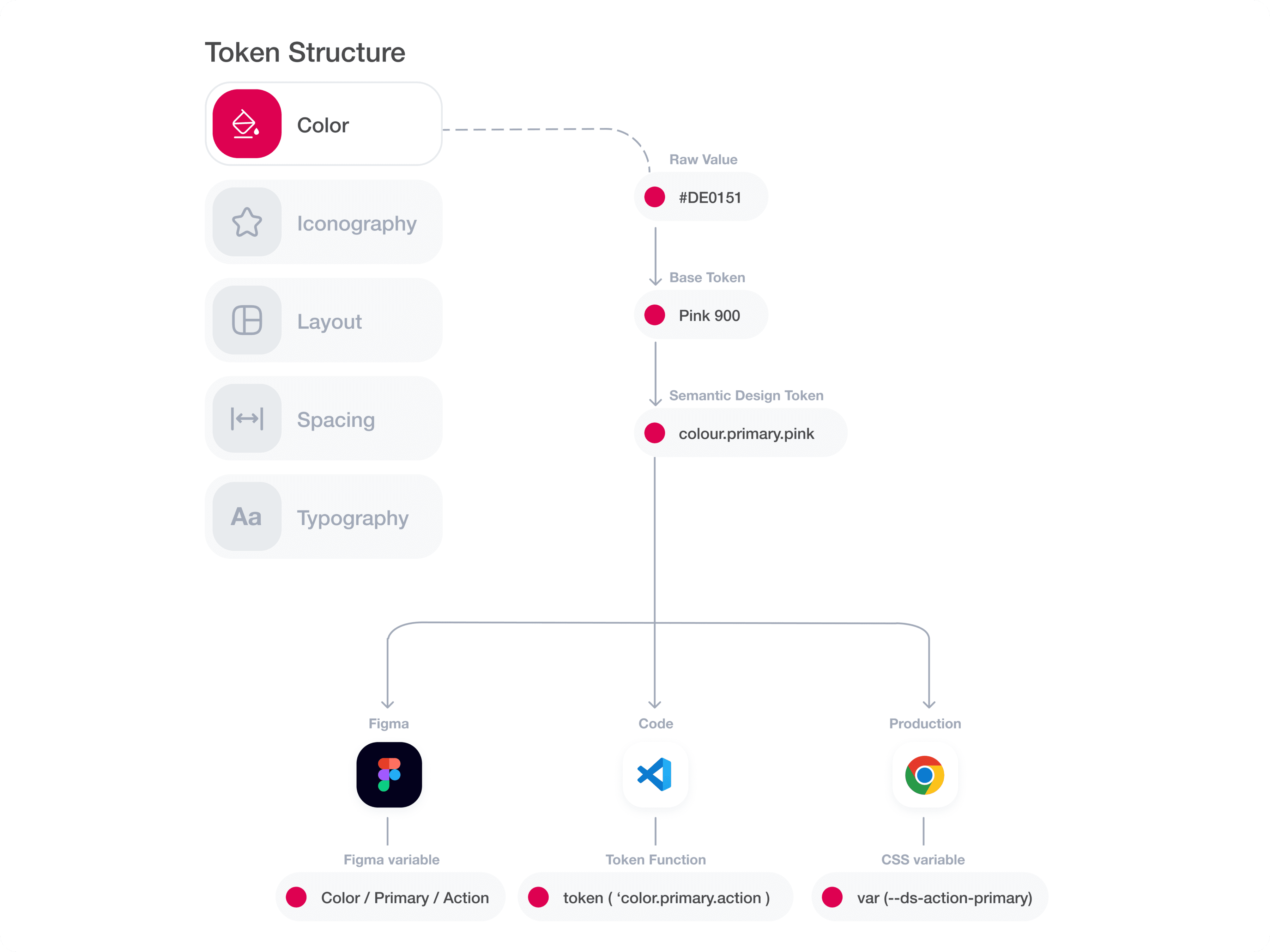
This ensured that the modular service model could scale consistently across markets — without breaking the user experience or operational logic.
Accessibility
Marhaba serves travellers across multiple international airports — including first-time flyers unfamiliar with airport services, elderly passengers needing assistance, and users booking under time pressure on mobile. Accessibility wasn't an afterthought; it was embedded into the design system from the start.
Key decisions I embedded into the system:
· WCAG 2.2 compliant design system — tokenised colour architecture built with contrast ratios meeting AA standard across all surface types, light and dark
· Screen reader support — all interactive components annotated with semantic labels, ARIA roles, and meaningful focus order — ensuring the full booking flow is navigable without visual context
· Keyboard navigation — complete booking journey operable via keyboard only, with visible focus states.

What didn't work
We couldn't merge the inventory systems
The original plan was to fully integrate DUBZ into Marhaba's backend — creating a single inventory and payment system. It was the right experience vision. But the technical cost and timeline made it impossible within the project constraints.
Rather than ship a broken integration, I proposed a white-label approach — embedding DUBZ services within the Marhaba UI while keeping the backends separate. Users could discover and book DUBZ services without leaving the ecosystem, with visual alignment maintaining trust across the handoff.
It wasn't the ideal solution. But it was the right call given the constraints — and it unblocked the product launch.
Final Impact
Restructuring the decision model delivered measurable results across revenue, conversion, and user experience.
Commercial Growth:
+41% increase in digital revenue — users could build their own service combinations instead of navigating rigid tier comparisons, increasing attach rate of add-ons naturally.

Conversion Optimization:
+21% conversion — task completion improved as users reached the right service faster, with less cognitive load and fewer abandoned sessions.

Drop-off Reduction:
−44% drop-off — users no longer hit dead ends from unavailable selections or confusing comparisons late in the funnel.

This transformation repositioned Marhaba from a fragmented service catalogue into a scalable, user-driven booking platform — where service selection, conversion, and business growth are seamlessly aligned.
