Role
Senior Product Designer
Scope
Web • Mobile • Kiosk • Service Platform
Focus
System design · Booking optimization · Operational integration
Impact
+24% revenue • −19% drop-off • −54% offline dependency

Overview
Ski Dubai is part of Majid Al Futtaim’s Global Snow portfolio, serving over 1M visitors annually within a high-density, sub-zero environment inside Mall of the Emirates.
Unlike traditional digital products, Ski Dubai operates as a physical-digital system, where booking decisions directly impact real-time operations such as capacity management, locker allocation, and equipment availability.
As the business scaled, fragmented digital touchpoints could no longer support operational complexity — requiring a unified system across web, mobile, kiosks, and on-site infrastructure.
The Problem
User Experience Issues
High cognitive load when selecting tickets, time slots, and equipment
Lack of visibility into real-time constraints (availability, lockers)
Disconnected journey between booking and on-site execution
Business Impact
Drop-offs in key decision steps
Missed upsell opportunities
Heavy reliance on staff during peak times
Role & Ownership
One of two Senior Product Designers, working with a Creative Lead. I owned the system architecture, kiosk experience and web experience, and the three decisions below that defined how the product connected digital and physical touchpoints.
I pushed to expand the scope beyond the website The brief was a website redesign. I made the case for a unified system across web, mobile, and kiosk — connecting booking decisions to real-time locker allocation, gear sizing, and capacity. The team aligned. The −54% staff dependency reduction came directly from this call.
I designed the COVID zero-contact flow I identified that guests still needed staff contact on arrival to get their locker. I proposed putting the locker number in the booking confirmation email — letting guests arrive, change, and reach the slope with zero staff interaction. Not in the brief. I spotted the gap and drove it.
I flagged the currency drop-off on kiosks but showed tourist drop-off spiked at the pricing step. I connected it to AED unfamiliarity and proposed a currency toggle. Small change, real barrier removed.
System Complexity
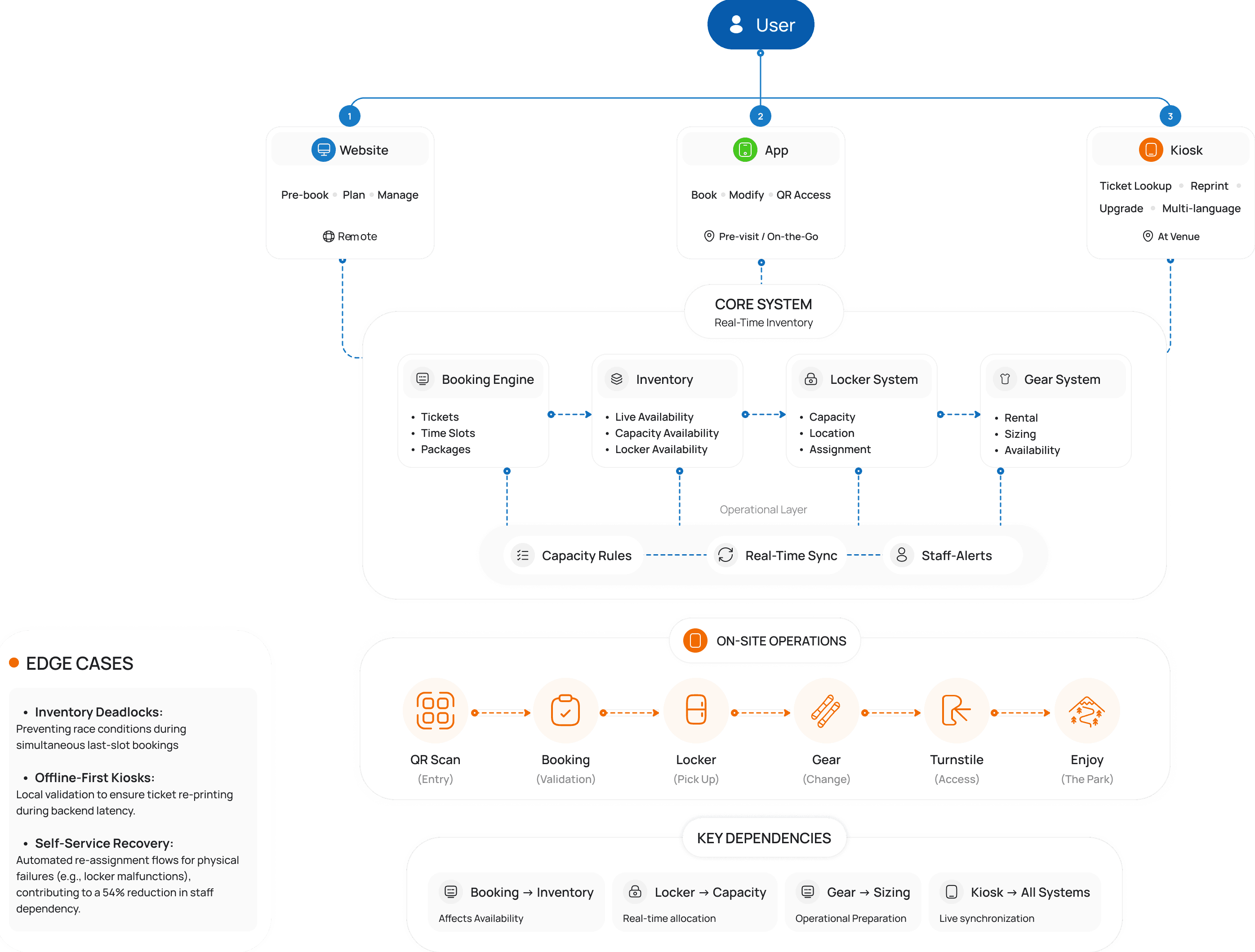
To support this, I designed a unified system architecture that synchronises user interactions with backend operational logic — ensuring real-time accuracy across booking, inventory, lockers, and gear systems.
Research & Discovery
Before defining solutions, I needed to understand the full system — users, operations, and the gaps between them
Cross-Functional Insights
A system this complex can't be designed in a vacuum. I conducted workshops with Retail, Penguin, and Ski School teams to map operational pains that guests never see but always feel.
Impact: Aligning the Marketing team’s campaigns with the IT team’s inventory constraints reduced "sold-out" friction by 19%.
The Multi-Channel Journey
I mapped the end-to-end journey from Awareness (Remote) to On-site execution.
Critical Gap: We discovered that the transition from "Research" to "Select Slots" was the #1 drop-off point due to a lack of real-time inventory visibility.
Key Discoveries: Context Switch: Users felt high anxiety when moving from the app booking to physical locker allocation.
Research Synthesis
I synthesized 200+ customer and staff feedback points, categorizing them into Actionable and Informative clusters. This allowed the team to move beyond "vague complaints" to specific systemic problems.
Key Finding: 60% of friction wasn't in the UI, but in the data continuity between booking and equipment sizing.
Strategic Persona
I identified 4 distinct archetypes—from the high-frequency "Freestyler" to the one-time "Family Man."
Design Decision: I prioritized the "Family Man" for the self-service kiosk, as they had the highest cognitive load and staff dependency, making them the highest-leverage user to design for
Key Design Decisions
This transformation shifted the experience from a linear booking flow to a system-driven model — where decisions, availability, and execution are continuously aligned.


Omnichannel Experience
Each interface adapts to user context — from remote planning to on-site execution — while maintaining a consistent decision model.
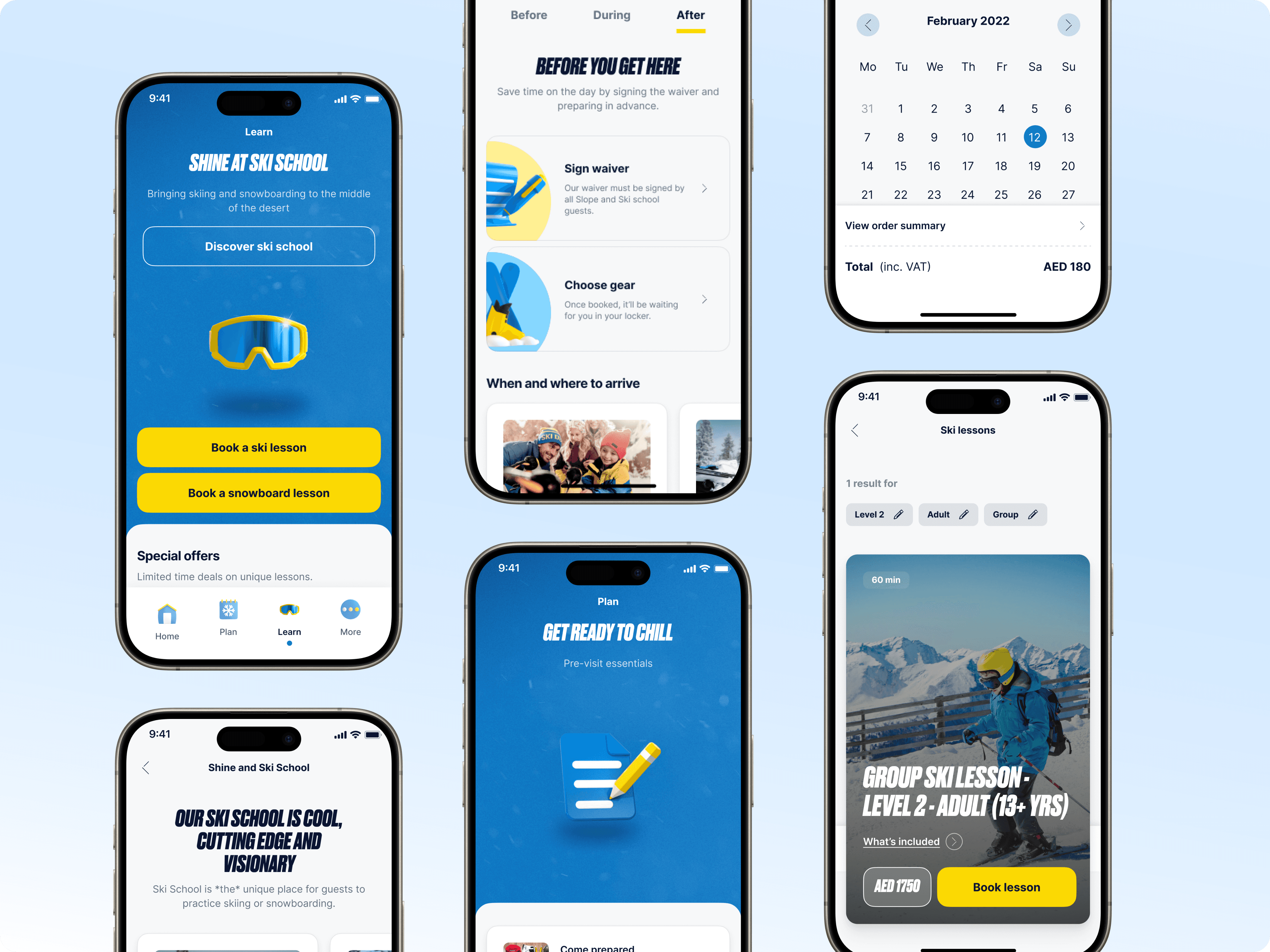
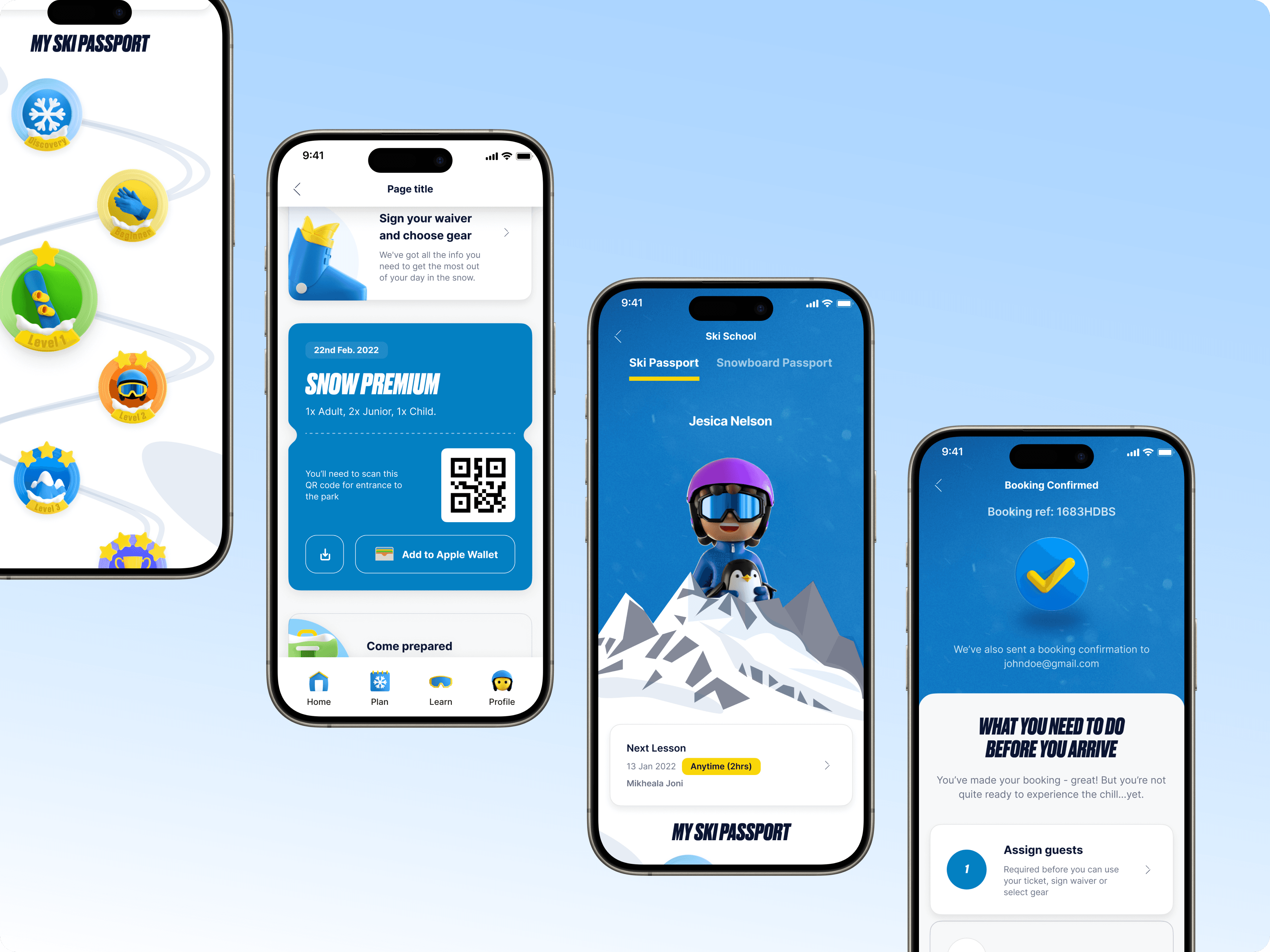
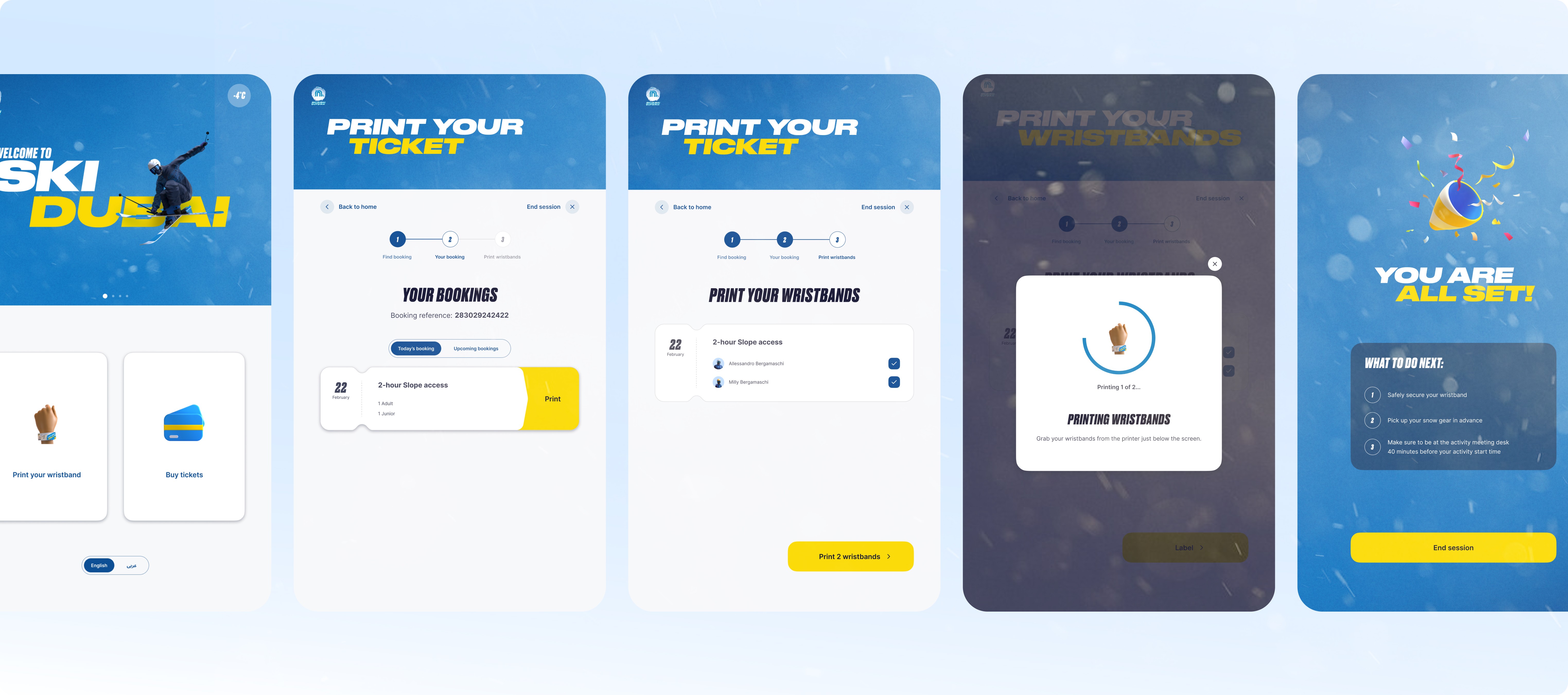
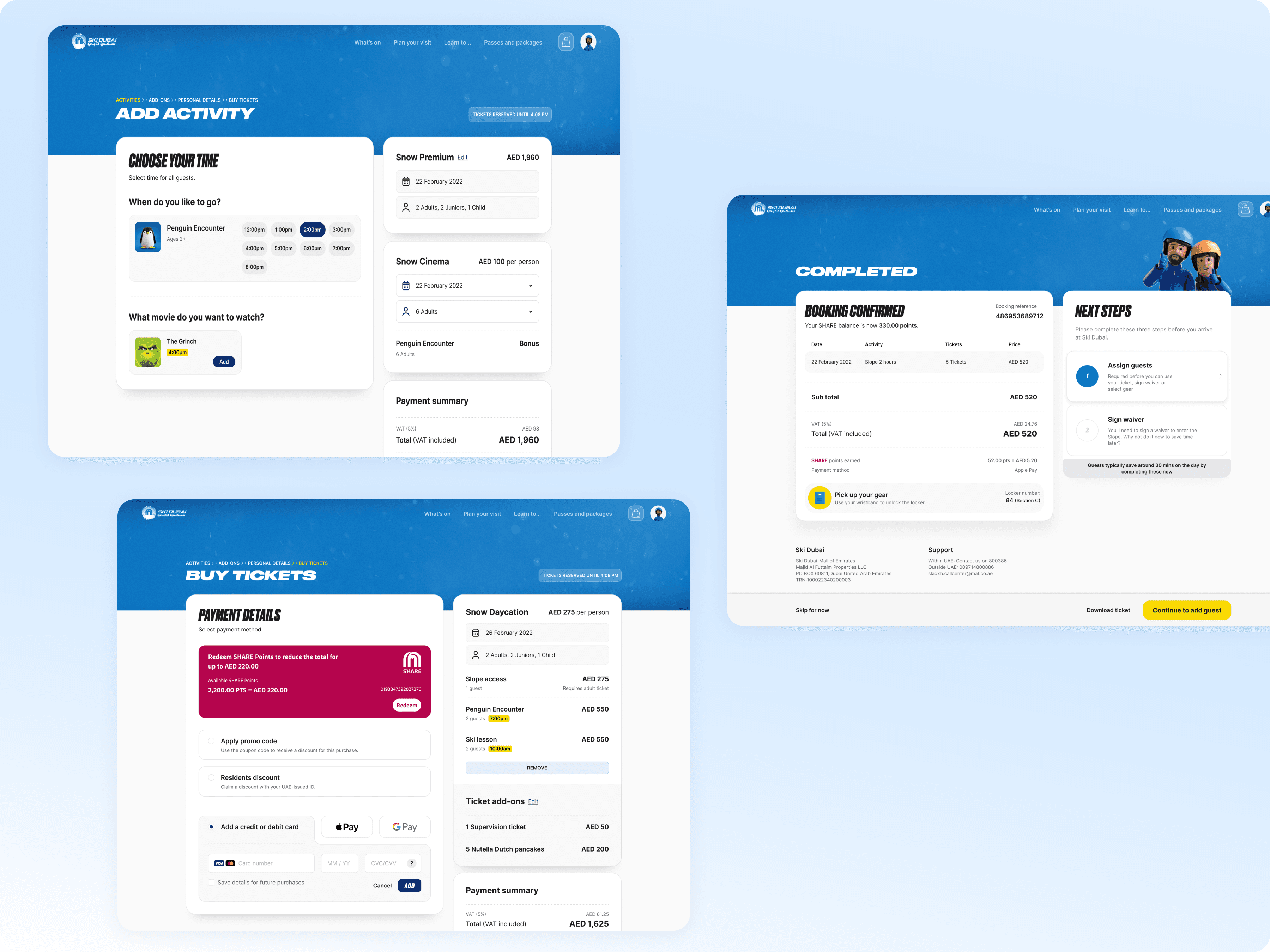
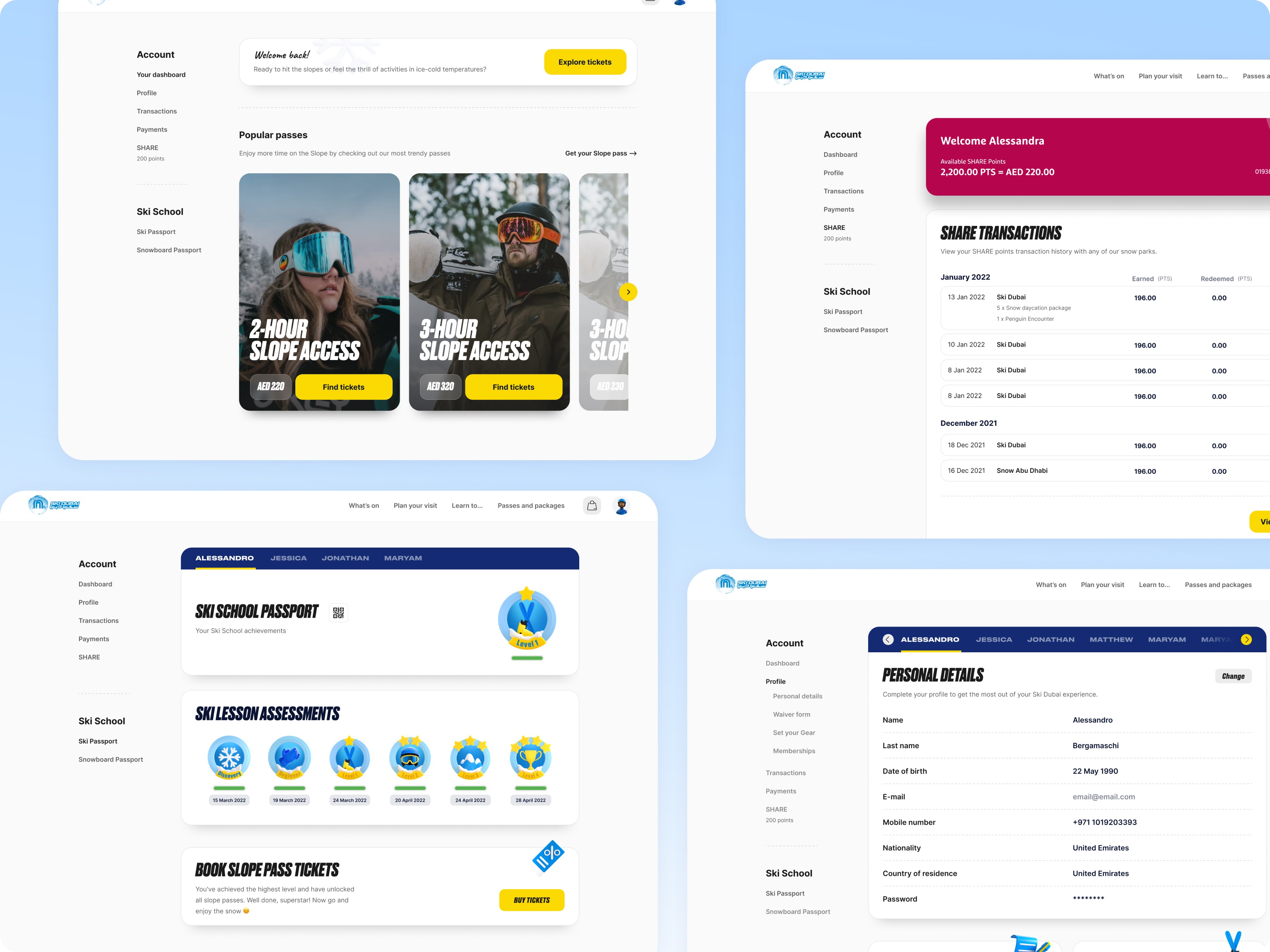
The system design principles were translated into a unified design language, ensuring that complex operational logic could be expressed through clear, consistent interfaces across all touchpoints.
Design System
To enable a system-driven product at scale, I developed a design system that directly reflects operational logic — ensuring that interface behaviour stays aligned with real-time backend constraints across all touchpoints.
Key Technical Highlights:
Scaled across multiple brands: Using token-based architecture, the system supports rapid adaptation across Snow Abu Dhabi and Snow Oman
Enabled localisation at system level: RTL-first approach ensures functional parity for complex booking flows and components
Connected UI with real-time operations: High-order components are designed to reflect backend constraints such as availability, capacity, and inventory.
Improved delivery efficiency: Reduced design-to-production cycle by 30% by aligning design and engineering through a shared system language


This ensured that the modular service model could scale consistently across markets — without breaking the user experience or operational logic.
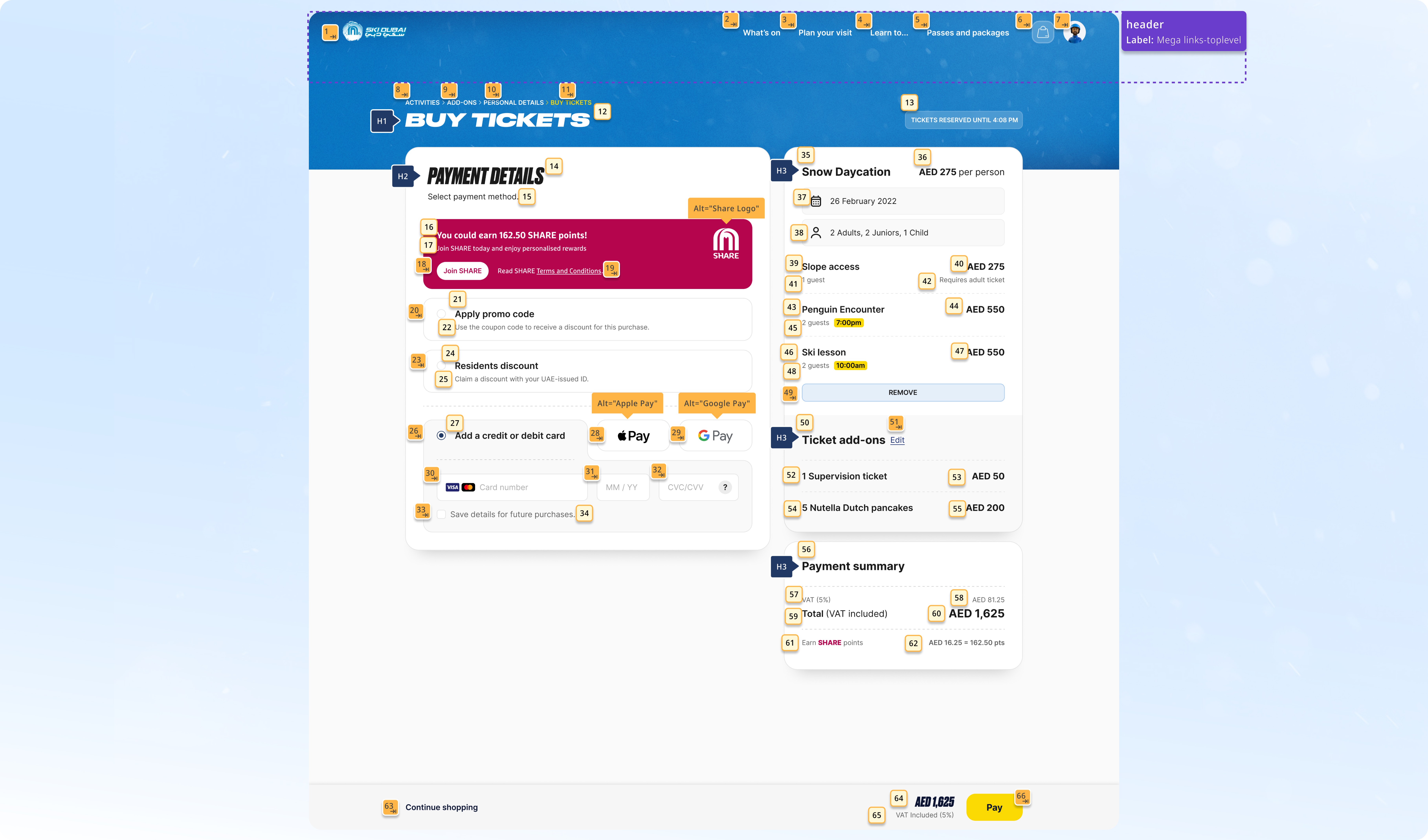
Accessibility
Ski Dubai serves over 1M visitors annually — including tourists unfamiliar with AED pricing, families with young children, and users interacting with kiosks in a cold, gloved environment. Accessibility wasn't a checklist item; it was a core design constraint.
Key decisions I embedded into the system:
· Touch targets sized for gloved hands — kiosk interactive elements designed at minimum 48×48px, larger than standard WCAG guidelines, to account for the physical environment
· Currency visibility for international users — I identified that tourist drop-off at pricing steps was linked to AED unfamiliarity and added a currency toggle to the kiosk checkout
· RTL-first design system — Arabic and English parity built at the token level, ensuring functional and visual consistency across both language directions
· Contrast and legibility in bright environments — kiosk UI optimised for high ambient light conditions inside the mall
What didn't work
The visual direction took three rounds to land
My initial direction used 3D illustrated icons for the main experience screens. The business pushed back — they wanted real photography to reflect the premium, physical nature of the venue.
Neither direction fully worked on its own. Pure illustration felt too abstract for a real-world experience. Real photography was too heavy and inconsistent across surfaces.
After several rounds of back and forth, we landed on realistic 3D characters — human figures rendered with enough fidelity to feel grounded, while keeping the flexibility and consistency that photography couldn't provide across web, mobile, and kiosk environments.
It was the right call in hindsight. The 3D characters became one of the most distinctive elements of the Ski Dubai visual identity.
Final Impact
Transforming the experience from a transactional booking flow into a system-driven operational platform delivered measurable results across business, user experience, and operations.
Commercial Growth:
A +24% increase in revenue was achieved by aligning upsell opportunities with real-time system constraints — enabling users to make better decisions based on availability, packages, and gear options within the same flow.

Conversion Optimization:
We reduced drop-off by 19% by surfacing real-time availability and capacity constraints earlier in the journey — preventing users from reaching invalid or sold-out selections late in the funnel.

Operational Scalability:
By synchronising booking decisions with inventory, locker allocation, and gear systems, I enabled a fully self-service journey — reducing staff dependency by 54% and allowing the park to support 1M+ annual visitors with greater efficiency.